
"Central American countries"
2000 article(s) found

Introduction to El Salvador Mercedes Manor Coffee Flavor with excellent thickness and Fat feeling
The national flag of El Salvador was launched in 1822, was rescinded in 1865, was restored in 1912, and was officially established as the national flag in the 1972 Constitution. The national flag is rectangular, with a ratio of length to width of 335 to 189. From top to bottom, the flag is connected by three parallel equal horizontal rectangles of blue, white and blue, and the central part of the white part is painted with the national emblem. Because El Salvador used to be a member of the Central American Federation, its flag is beautiful.

Characteristics of coffee beans in various producing areas in Panama which producing area of Panamanian butterfly coffee
For the exchange of professional baristas, please follow the Coffee Workshop (official Wechat account cafe_style). There are seven countries in Central America, namely, Belize, Costa Rica, El Salvador, Guatemala, Honduras, Nicaragua and Panama. All seven countries in Central America produce coffee, among which Guatemala, Costa Rica and Honduras are global coffee exporters.
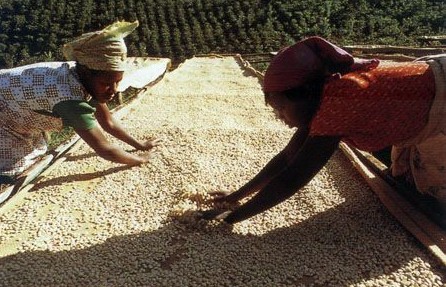
Go to Costa Rica, looking for organic coffee beans, American specialty, Costa Rican coffee.
The coffee beans produced at the high latitudes of Costa Rica are famous in the world, full-bodied, mild in taste, but extremely sour. The coffee beans here have been carefully processed, which is why they have high quality coffee. Located in the south of SanJos, the capital of Tarasu, Costa Rica is one of the most valued coffee growers in the country. Tarasu in Costa Rica (

Salvadoran coffee bean flavor, Salvadoran coffee beans are suitable for hand brewing or siphon?
For information, please pay attention to the coffee workshop (Wechat official account cafe_style) Salvadoran coffee refers to the coffee produced in the small Central American country of El Salvador, where coffee is light, aromatic, pure and slightly sour, with a well-balanced flavor and is a specialty of Central America. With sour, bitter, sweet and other taste characteristics, the best baking degree is moderate, deep. Salvadoran coffee and Mexico,

The characteristics of coffee in the top ten American producing regions-balanced American beans
Professional coffee knowledge exchange more coffee bean information please follow the coffee workshop (Wechat official account cafe_style) Coffee Xiaobai, just drink is the smell of coffee, smell only coffee ah! It's normal! In advanced learning, you can also feel that other flavors of coffee are more often used in daily life with taste and taste, that is, fla in English.

Central and South American Coffee Flavor washing Raw Coffee beans at La Tisa Manor in Guatemala
Coffee was really introduced into Guatemala in 1750 by Father Jesuit, where the coffee industry was developed by German colonists at the end of the 19th century. Today, most of the coffee industry's production takes place in the south of the country. There are seven main coffee producing areas in Guatemala: Antigua, Coban, Atitlan and Huehuete.

Central and South American style of coffee in Nicaragua coffee producing areas
Nice acidity, moderate alcohol Nicaragua coffee belongs to Central and South American style coffee, although the acidity is not very high, but feel fresh. The alcohol level was also not high, but the overall feeling was just right, neither weak nor too thick. Make it easier to accept. The taste of red wine can be vaguely felt in the light sourness, which is also a major feature of Nicaragua coffee.

Introduction to the characteristics of the fragrant and pure El Salvador boutique coffee bean flavor and taste manor
Salvador means savior in Spanish, named after Columbus's experience in discovering the American continent. The national flag of El Salvador was launched in 1822, was rescinded in 1865, was restored in 1912, and was officially established as the national flag in the 1972 Constitution. The national flag is rectangular, with a ratio of length to width of 335 to 189. A horizontal rectangle consisting of blue, white and blue parallel to each other from top to bottom.
Queen's Manor AAA of Dominica (Dominican Republic, Queen Estate, Grade)
The Dominican Republic is one of the island countries in Central America and the Caribbean, bordering Haiti. Like many Central American countries, Dominica has experienced poverty and unrest. After the 18th century, democratic elections were held, the country entered a period of stable development, and coffee cultivation continued to increase. The best coffee producing area in Dominica is Barahona, where coffee grains are full.
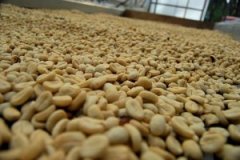
Panamanian coffee, the king of coffee price ratio in Central America.
Panamanian Coffee growing Environment Panama is a small country located in the center of the American continent. The waters of the Atlantic and Pacific oceans flood its beaches. Panama is located at 9 degrees north latitude, the meeting point of the Central Mountains, where Mount Baru, one of the highest volcanoes in Central America, is located. The Baru volcano has an altitude of more than 11400 feet and the land around it is rich.

Introduction to Central American boutique coffee estate: NARANJO El Cafetal, Costa Rica
Professional coffee knowledge exchange more coffee bean information Please pay attention to the coffee workshop (Wechat official account cafe_style) Costa Rica has a mild climate, rainy mountains and fertile soil formed by volcanoes, which makes Costa Rica the most suitable environment for coffee growth. In addition to the superior growth environment, the Costa Rican government also had the foresight to start at the beginning of the 19th century.

Grinding scale of coffee beans in Fenghuang Manor, Costa Rica
Grinding scale of coffee beans in Fire Phoenix Manor in Costa Rica from 855 to 1857, President Morapolas commanded the Costa Rican army in conjunction with other Central American countries to crush the American adventurer W. Volcker's invasion defended the independence of Central America. From 1870 to 1882, T. Guardia Gutierrez exercised dictatorship, weakening the power of the two families. From

Sweet flavor nurtured by microclimate in the main coffee producing areas of Central and South America, Panama coffee bean producing areas.
Professional coffee knowledge exchange more coffee bean information please follow Coffee Workshop (Wechat official account cafe_style) Front Street-Panamanian Coffee introduction Central America has the natural advantages of sunshine, land, and mountains, and an abundant labor force, the region is uniquely blessed to grow and produce high-quality coffee. In the late 19th century, coffee had become a source of economic growth in Central American countries.

Introduction of boutique coffee beans in El Salvador coffee flavor and taste producing area
The Salvadoran flag was launched in 1822, rescinded in 1865 and restored in 1912. The Constitution of the year of the Salvadoran Flag in 1972 was officially established as the national flag. The national flag is rectangular, with a ratio of length to width of 335 to 189. From top to bottom, the flag is connected by three parallel equal horizontal rectangles of blue, white and blue, and the central part of the white part is painted with the national emblem. Because El Salvador used to be

Salvadoran coffee Central and South American coffee beans
Boutique coffee is fresh coffee. Whether it's food or drink, of course, the fresh the better, and so is boutique coffee. High-quality coffee should keep the coffee beans fresh before making, including the preservation of baked beans, and grind the coffee beans into powder before making, which is also to retain its original and best flavor. And the way of making hand-made coffee is such a way to make high-quality coffee.

Introduction of Salvadoran Coffee Manor with Natural shaded woodland
The country has 10 per cent forest cover, of which more than 80 per cent is natural shaded woodland, which is ideal for the planting of coffee trees (shade grown coffee), which is very important for the Central American ecological corridor (Central American Biological Corridor). But in 1970, a serious coffee leaf rust spot (coffee leaf rust disease) occurred in order to

Costa Rican Coffee Culture Costa Rica Coffee History
Costa Rica, with a population of only 3.5 million, has 400 million coffee trees, and coffee exports account for 25 per cent of the country's total exports. Costa Rica also benefits from the Central American Society for Agricultural Research (Turrialba of the Central American Agricultural Research Institute, IAAC) in Tarasu, which is an important international research center.

Flavor and taste characteristics of El Salvador Himalayan Coffee Manor
The Salvadoran flag was launched in 1822, rescinded in 1865 and restored in 1912. The Constitution of the year of the Salvadoran Flag in 1972 was officially established as the national flag. The national flag is rectangular, with a ratio of length to width of 335 to 189. From top to bottom, the flag is connected by three parallel equal horizontal rectangles of blue, white and blue, and the central part of the white part is painted with the national emblem. Because El Salvador used to be

Boutique coffee beans Central America Nicaraguan coffee beans
Nicaragua is located in central Central America, bordered by the Pacific Ocean to the west and the Caribbean Sea to the east. The highlands in the north and the coastal plains in the east are part of the Central American volcanic belt. The eastern plain is high-temperature and rainy, with a tropical maritime climate. The suitable climate provides an excellent growth environment for the cultivation of coffee. (Pakamara, Nicaragua on the left, Guatemala on the right) High-quality Niagara

Flavor of American coffee beans | Coffee characteristics of American coffee producing areas | Bolivian coffee
Professional coffee knowledge exchange more coffee bean information Please follow the coffee workshop (Wechat official account cafe_style) many people say that they smell coffee, but are afraid of the bitterness of drinking coffee ~ in fact, through simple understanding and training, everyone can drink the flavor of coffee. Today, the editor begins to introduce the American coffee beans, which are famous for their sense of balance.